
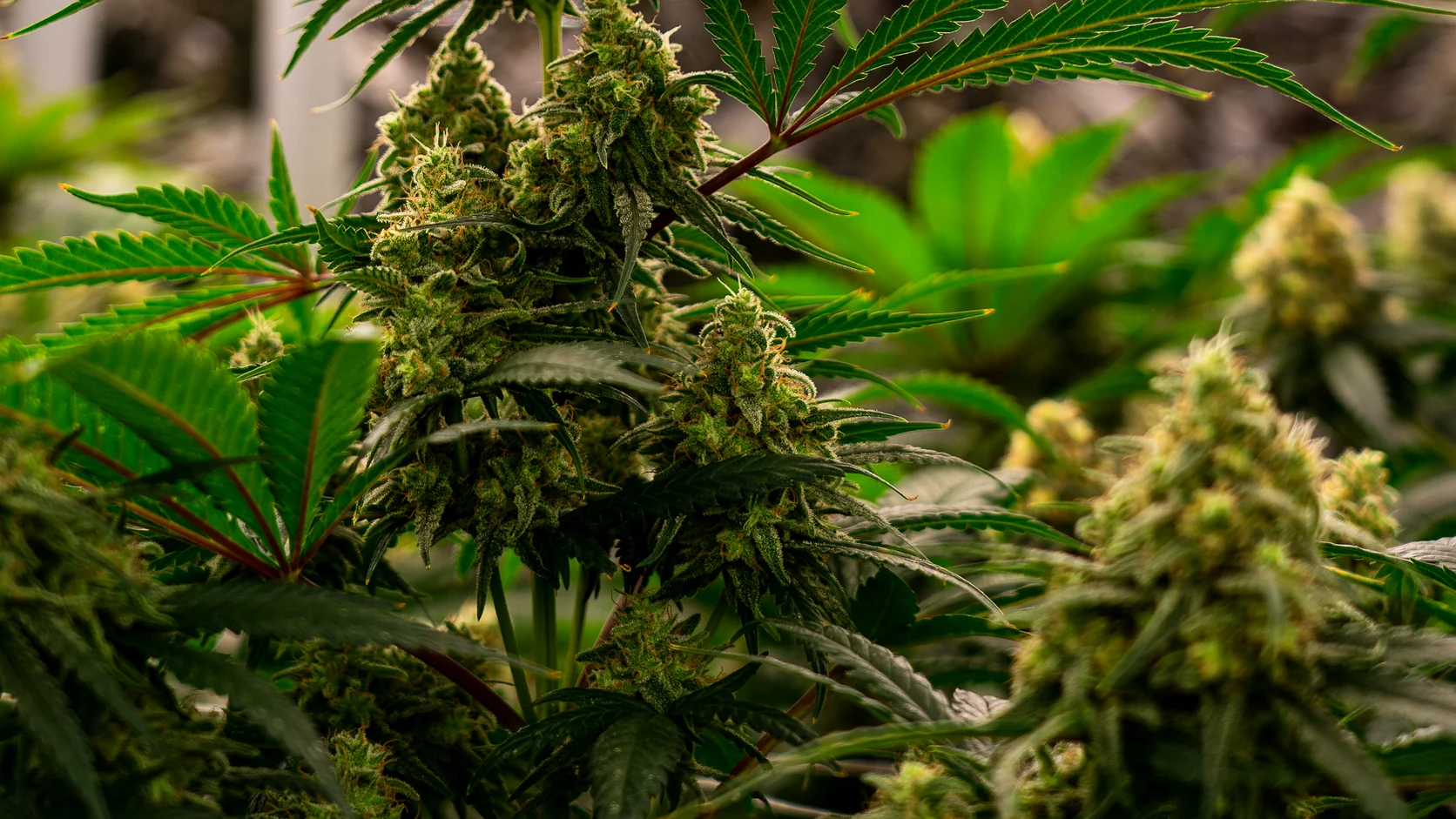
In many Bangkok shops, the buds that catch the eye first are the biggest, hardest, and heaviest ones in the jar. It is easy to assume that dense flower means strong, well-grown cannabis. Sometimes it does. Sometimes that density comes from a shortcut called PGRs: plant growth regulators.
This article explains what PGRs are, why they matter to the people who consume the flower, what living soil cultivation actually means, and why neither the look of a bud nor a marketing label is a reliable proof of quality on its own.
What are PGRs?
Plant growth regulators are synthetic compounds that change how a plant uses its own hormones. In ornamental and commercial farming they are used to keep plants compact or to push energy into fruit instead of leaves. In cannabis, some growers use them in the flowering stage to produce tighter, heavier buds and a bigger harvest weight.
The compounds most often mentioned in cannabis are paclobutrazol, daminozide, and chlormequat chloride. These are not approved for use on cannabis in many regulated markets. Daminozide is a well-known example: its use on food crops was withdrawn in the United States in 1989 after cancer concerns. For paclobutrazol and chlormequat, there is very little research on what happens when residues are heated and inhaled.
Why growers use them
The motive is mostly commercial. Cannabis is often priced by weight, and dense buds look impressive in a display jar. A regulator can make a plant put more mass into each flower and stretch less, which is attractive for a grower who wants volume at a low cost per gram.
Growers who have worked with both methods commonly report a trade-off: the flower gets heavier, but aroma, resin, and overall experience can suffer. That is why many experienced consumers treat unusually hard, compact buds with a muted smell as a reason to ask more questions rather than a sign of quality.
Signs that are often linked to PGR use
Hints, not proof
- ✓Buds that feel rock-hard and unusually heavy for their size, with almost no springiness when gently squeezed.
- ✓A dense, compact shape with relatively little visible resin for how solid the bud looks.
- ✓A weak or flat aroma even when the jar has just been opened.
- ✓Many dark or orange pistils packed into the surface of the bud.
- ✓A harsh, chemical-tasting smoke that does not match the strain's expected profile.
Any of these can also come from genetics, drying, curing, or storage. They are reasons to ask for information, not a laboratory result.
What living soil actually means
Living soil is a cultivation method, not a brand. Instead of feeding the plant mainly with bottled synthetic nutrients, the grower builds a soil full of microbial life, fungi, and organic matter. The soil food web breaks down nutrients and makes them available to the roots over time, much like a healthy natural ecosystem.
Growers who choose living soil usually do it for flavour, aroma, and a more natural plant rhythm. The method is slower and less predictable than pushing a plant with additives, and it generally leaves no reason to use growth regulators at all.
Why living soil is not automatic proof either
A living soil label tells you how a grower says the plant was fed. It does not tell you how the flower was dried, stored, or tested. Organic inputs can still carry heavy metals, a humid drying room can still produce mould, and a claim on a menu is not the same as a batch-specific laboratory report.
In other words: living soil is a good starting point for a conversation, not the end of it. The same honest questions apply to every product, whatever the label says.
How we grow at Highcraft
At Highcraft we grow organically in living soil, both in our indoor grow room and outdoors. We do not use growth regulators to make buds heavier. The plants build their own structure, aroma, and resin at their own pace, fed by the soil life rather than pushed by additives.
That is a deliberate choice for flavour, a smoother experience, and a cleaner product, and it means a slower harvest than a PGR grow would give. Because we just argued that a label alone is not proof, we hold ourselves to the same standard: ask us how a batch was grown, when it was harvested, and how it has been stored, and we will tell you.
Related: Cannabis Mold and Contaminants — the Health Risks Travelers Should Understand
Side by side: what each one tells you
Appearance alone
- ✓Shows density, colour, and trim quality
- ✓Can be shaped by PGRs, genetics, or curing
- ✓Cannot show residues, metals, or mould spores
- ✓Easy to market, hard to verify
Verifiable information
- ✕Named grower and identifiable batch
- ✕Clear cultivation method you can ask about
- ✕Lab results that match the batch on offer
- ✕Sensible dry, sealed, cool storage
Good-looking flower with traceable information is a better choice than good-looking flower with none.
Questions worth asking in any Bangkok shop
Before you choose a product
- ✓Who grew this batch, and how was it grown?
- ✓Were any growth regulators or synthetic additives used during flowering?
- ✓Is there a recent lab report, and does it include pesticide and growth-regulator residues?
- ✓When was it harvested, and how has it been stored since?
- ✓Can I smell the flower before deciding?
A professional shop should be able to answer calmly and specifically. Vague replies, pressure to buy quickly, or the claim that "everything is organic" without any detail are all signs to slow down.
Read the companion guide: How Asian Travelers Can Assess Clean Cannabis in Bangkok
The bottom line
Dense buds are not automatically bad, and living soil is not automatically perfect. What separates a careful product from a risky one is transparency: knowing how the plant was grown, how it was handled after harvest, and whether testing backs up the story. Let the information decide, not the shape of the bud.
This article is general information, not medical or legal advice. Cannabis flower in Thailand is currently restricted to medical use, and the rules can change. Confirm the current legal route with an official Thai authority or a licensed medical professional before buying or using cannabis.
Taste the living soil difference
Visit Highcraft near BTS Asok and MRT Sukhumvit, ask about our organic indoor and outdoor grows, and get clear answers about every batch before you decide.