
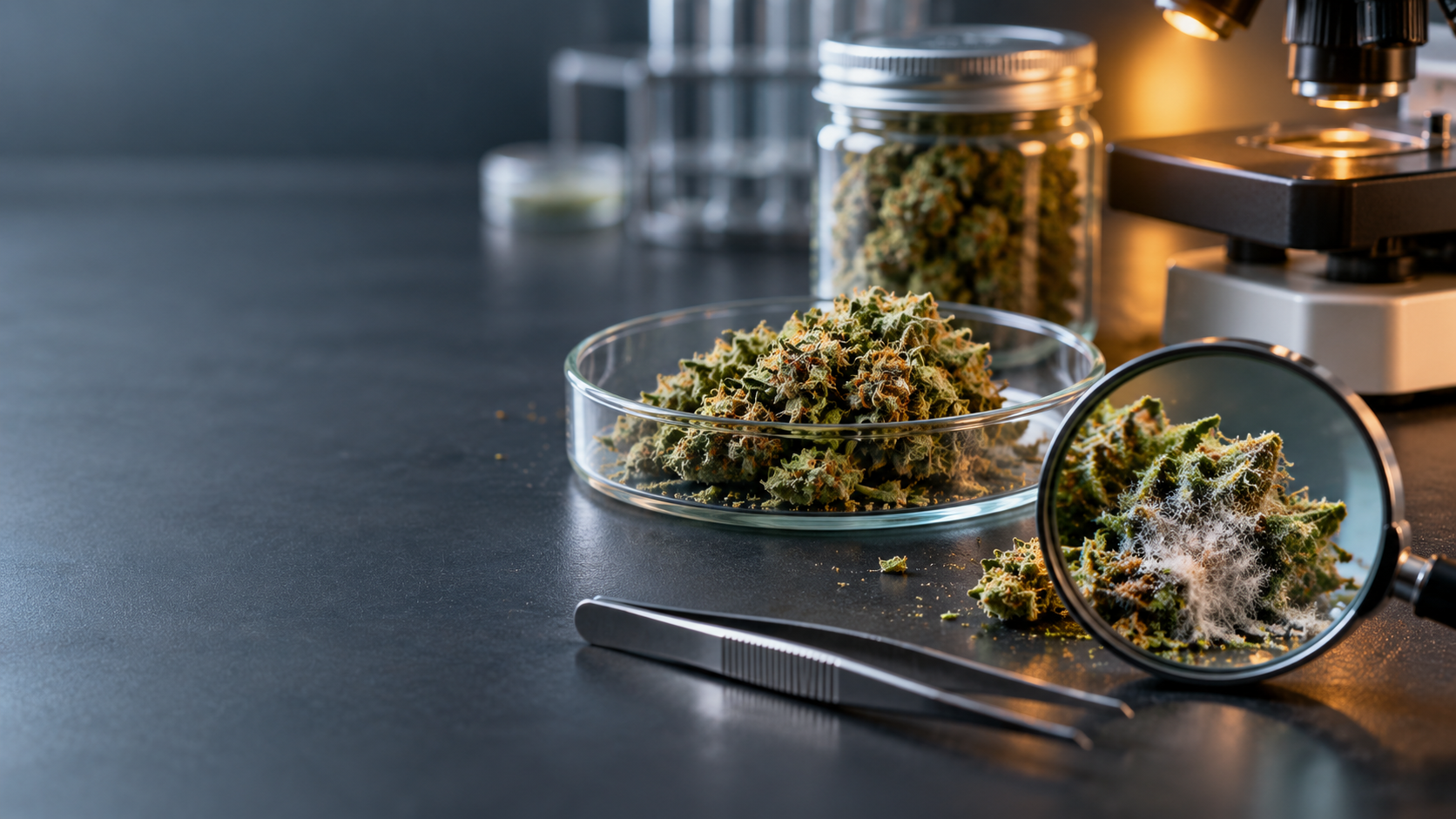
Cannabis is not automatically safe because it is a plant. The way it is grown, dried, tested, stored, and consumed can change the risk—especially when a product contains mould, pesticide residues, heavy metals, or other contaminants. For travelers in Bangkok, the key question is not whether a flower looks attractive. It is whether the product has a traceable batch and credible safety information.
This article explains the main contamination risks in plain language. It does not diagnose illness or replace medical advice, and it does not mean that every informal product is contaminated. It means that contamination cannot be reliably ruled out by appearance alone.
1. Mould can be a respiratory risk
Cannabis that is harvested too wet, dried unevenly, or stored in warm and humid conditions can develop mould. Mould-contaminated material may expose the user to spores, allergens, and microbial byproducts. The risk is especially important for people with asthma, chronic lung disease, mould sensitivity, or a weakened immune system.
Visible fuzzy growth, unusual dampness, a persistent musty smell, or a product that feels wet inside are reasons not to use it. Do not try to remove one visibly affected part and assume the rest is safe. Mould can spread beyond what the eye can see.
2. Pesticide residues are not visible
Plants can retain pesticide residues when products are used incorrectly or when no meaningful quality-control process exists. You generally cannot identify a residue by looking at a bud, and smell is not a reliable laboratory test. Burning or heating a contaminated product can also change the chemicals that reach the lungs.
A claim such as organic, living soil, or no-spray is not the same as a current laboratory report. Ask whether testing covers relevant pesticide residues and whether the report can be matched to the batch being offered.
3. Heavy metals can come from the growing environment
Cannabis can absorb metals from contaminated soil, water, fertilisers, dust, or equipment. Lead, cadmium, arsenic, and mercury are not something a customer can screen for visually. If a seller cannot explain the growing source and testing process, treat the product as unverified rather than assuming it is clean.
4. Smoking adds its own lung burden
Even uncontaminated cannabis smoke contains irritants and toxins, and smoking can contribute to cough, airway irritation, and bronchitis symptoms. Contaminants add a separate concern; choosing a tested product does not make smoke harmless. Anyone with a lung condition should speak with a healthcare professional before inhaling cannabis.
5. What a responsible safety check looks like
Questions before you buy
- ✓Can you identify the grower, batch, harvest, and storage conditions?
- ✓Are current laboratory results available for mould, microbial contamination, pesticides, heavy metals, and potency?
- ✓Does the report clearly match the batch being sold?
- ✓Has the product been kept dry, sealed, and protected from heat and humidity?
- ✓What should I do if I develop chest tightness, wheezing, severe vomiting, confusion, or an allergic reaction?
Do not trust appearance tests
White or grey ash does not prove that cannabis is clean, and dark ash does not prove that pesticides are present. Hard buds, sparkling trichomes, a strong aroma, and attractive packaging are not substitutes for testing. Visual checks can help you notice obvious problems, but they cannot certify safety.
When to stop and seek help
Stop using the product if you develop breathing difficulty, chest pain, fainting, severe or persistent vomiting, swelling, confusion, or symptoms that feel dangerous. Seek urgent medical care for severe symptoms. If you suspect mould or chemical contamination, keep the packaging and batch information so a healthcare professional can understand what happened.
The safer decision for visitors
Choose a professional venue that can explain its legal process, product origin, storage, and testing without pressure. A clean lounge and friendly staff are helpful, but the strongest signal is specific, verifiable information. If that information is unavailable, the safest choice is to leave the product alone.
Read the companion guide: How Asian Travelers Can Assess Clean Cannabis in Bangkok
This article is general information, not medical or legal advice. Thai cannabis rules and product requirements can change. Confirm the current legal route with an official Thai authority or licensed medical professional before taking action.
Ask for the batch information
Highcraft aims to help international visitors understand product origin, storage, testing, and the current legal process before making a decision.